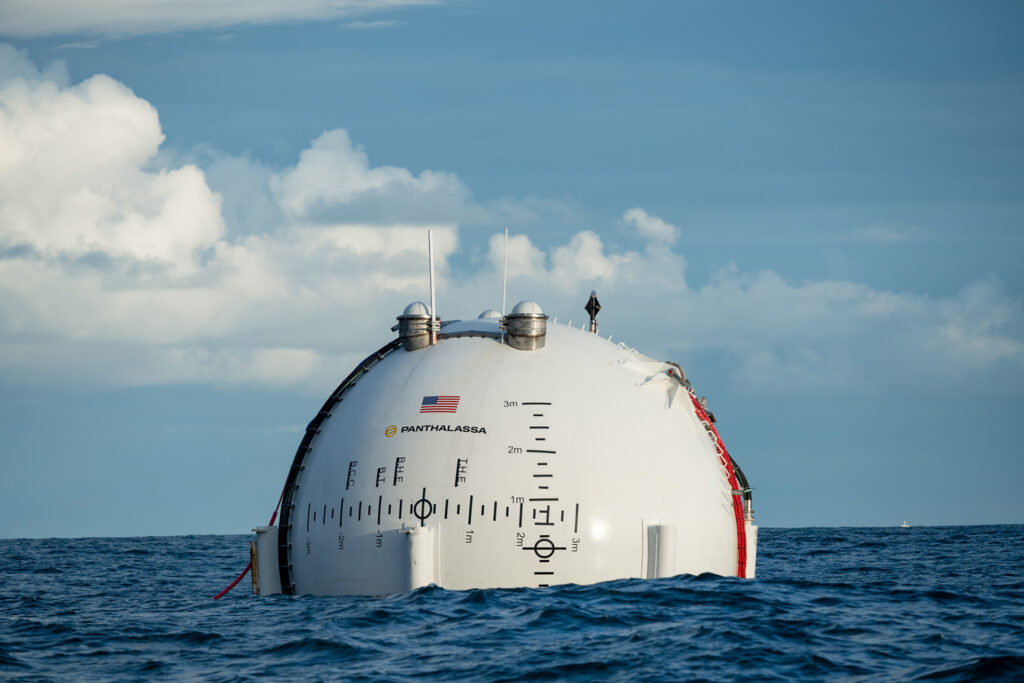
This one stopped me mid-scroll. Here’s what’s actually happening and why it matters:
No Land. No Permits. No Limits. The Future of AI Infrastructure Is Offshore.
Peter Thiel just put $140 million into floating data centers
The Goalpost
What’s happening: Panthalassa, a Portland, Oregon-based renewable energy and ocean technology company, raised $140 million in a Series B round led by Peter Thiel, with the funding aimed at manufacturing and deploying autonomous, ocean-powered computing systems for AI infrastructure.
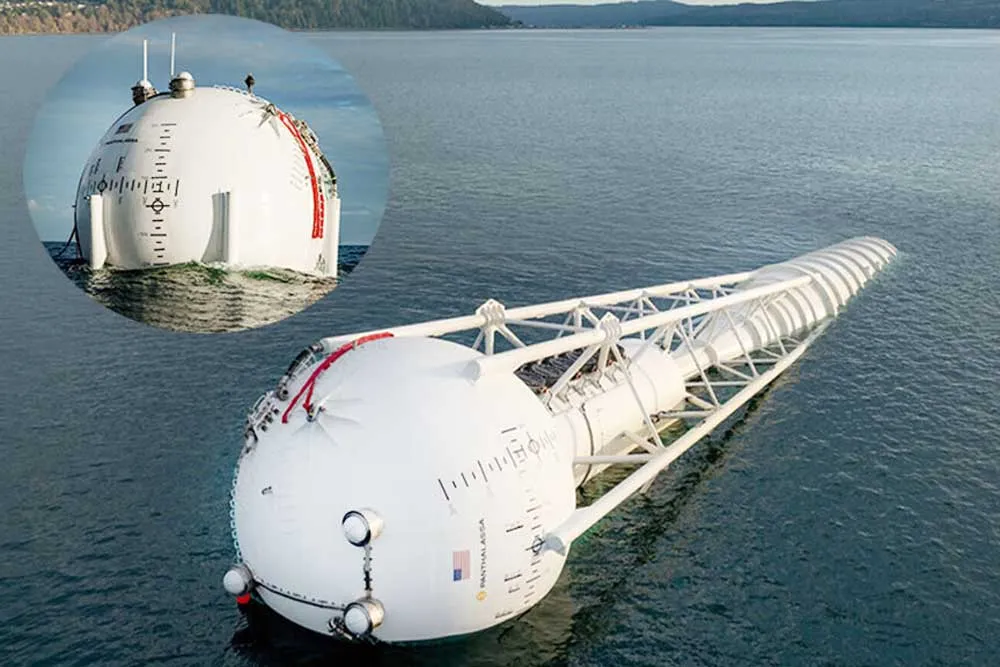
Why it matters: Terrestrial data centers face mounting constraints including limited grid capacity, cooling water scarcity, supply chain bottlenecks, permitting delays, and growing community pushback. Panthalassa’s approach sidesteps all of it. The company pairs wave energy with onsite AI computing, bypassing transmission costs entirely, while tapping cold ocean water to cool the hardware, solving two of the biggest problems in land-based infrastructure at once.
How the technology works: Each node is an autonomous, fully integrated system housing both AI infrastructure and power-generating hardware in a single offshore unit. As ocean waves pass, the node bobs up and down, converting that relative motion into usable mechanical energy through internal turbines, which generates electricity while cold seawater handles cooling. Data is then transmitted back to shore via satellite.
The timeline: In 2026, Panthalassa plans to deploy its Ocean-3 pilot node series in the northern Pacific Ocean, with commercial deployments targeted for 2027.
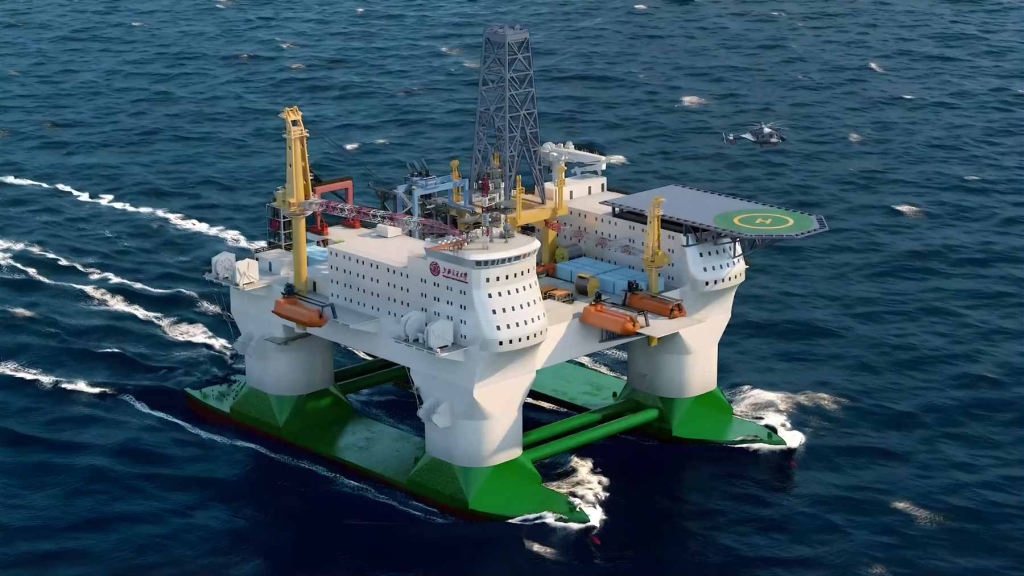
The bigger picture: This is part of a broader trend, with Meta partnering with Overview Energy on space-based solar for its data centers, Alphabet’s CEO suggesting space-based AI compute could become the norm within a decade, and China already deploying an offshore underwater facility near Shanghai using seawater cooling. Let’s call it a research island. The land-based model is under pressure, and capital is now flowing toward wherever the constraints don’t exist yet, complete with potentially huge energy savings.
My Mental Gymnastics
The most consequential infrastructure decisions of the next decade will be made by those who recognize where legacy constraints no longer apply, and act before the regulatory and institutional language catches up.
Land-based AI infrastructure is approaching hard physical limits. Grid interconnect delays, water usage constraints, zoning bottlenecks, and community resistance are no longer transient friction. They are structural ceilings. And structural ceilings are not solved through negotiation, they are solved through relocation of the problem.
This is the pattern Peter Thiel has consistently targeted. PayPal moved financial settlement ahead of regulatory taxonomy. Palantir operationalized large-scale intelligence systems before governments had a coherent procurement or oversight framework. Panthalassa, in that lineage, is not simply about floating data centers. It is about shifting compute infrastructure into jurisdictionally and physically unconstrained environments before “maritime AI infrastructure” becomes a defined regulatory category.
That category is already forming in adjacent domains. Maritime AI is not theoretical—it is operational. Across global shipping networks, AI systems are actively optimizing fuel consumption, predicting equipment failure, and dynamically adjusting routing. Industry estimates suggest roughly 80%+ of maritime logistics operators are already deploying or piloting AI-driven systems, primarily to increase efficiency and reduce operational risk rather than replace human judgment. The frontier is not adoption, it is scale and integration.
For tech executives, the signal is unambiguous: competitive advantage in AI is no longer primarily determined by model sophistication or talent density. It is increasingly determined by physical constraint arbitrage—power availability, cooling efficiency, land access, and permitting velocity. The binding constraint has shifted from compute design to infrastructure placement.
This reframes geography itself as a strategic variable. The ocean represents not novelty, but unregulated physical capacity, approximately 139 million square miles of jurisdictionally diffuse, energy-adjacent space. In that context, offshore compute is not an eccentric extension of data center architecture; it is a jurisdictional bypass layer for the AI stack.
Early movers in this domain are not simply deploying infrastructure. They are implicitly participating in the formation of future regulatory defaults to define what is normal before it becomes codified. In infrastructure terms, they are not building capacity. They are pre-writing the constraints others will inherit.
Leave a Reply
You must be logged in to post a comment.