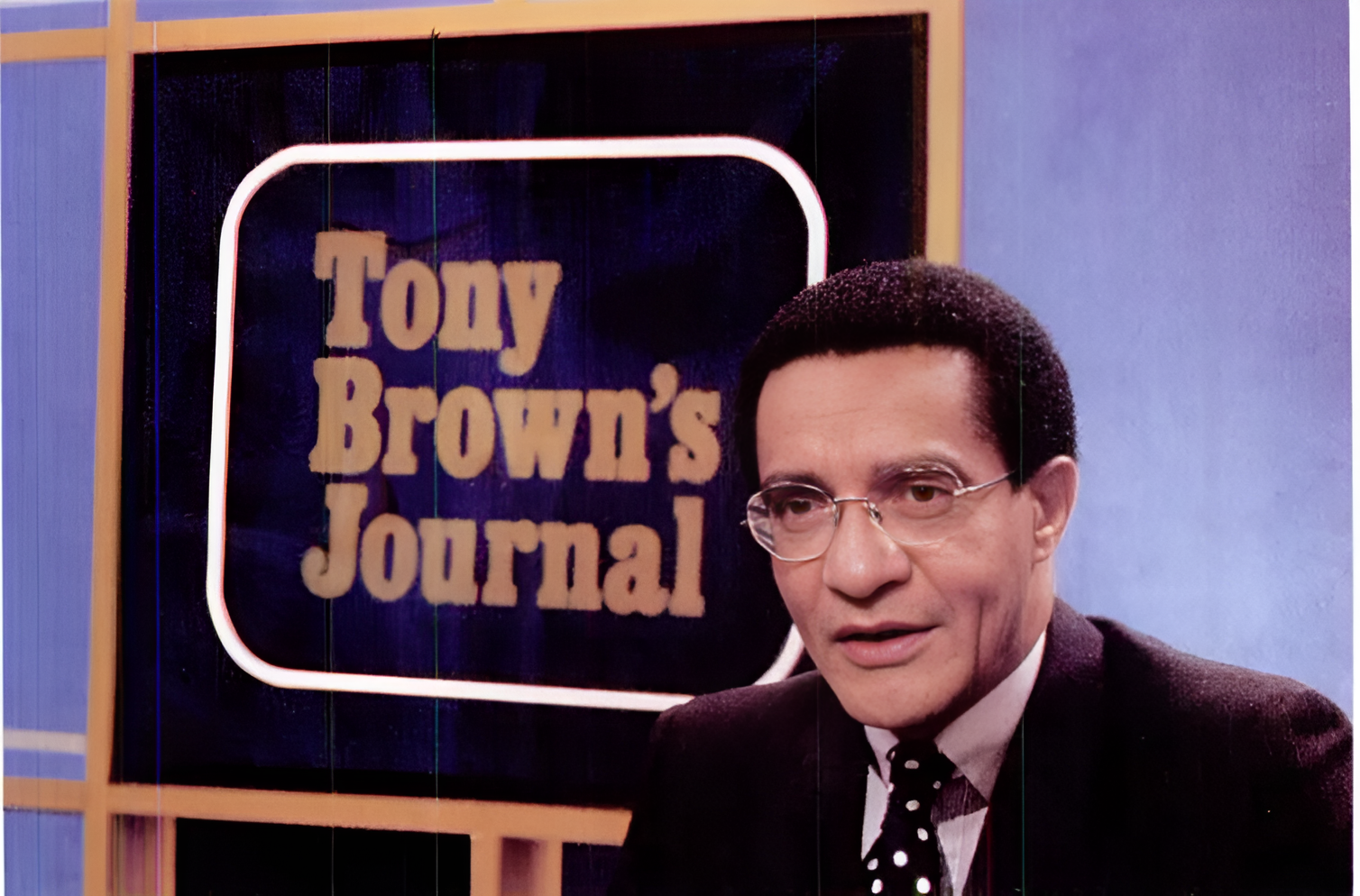
I wanted to take a small portion of time this Saturday to salute the legacy of a gentleman who, to me, represented a singular force in American media. Tony Brown was a man who understood that Black voices needed more than representation. He wanted to make sure they had a dedicated, enduring platform to shape the national conversation on their own terms.
From his roots in Detroit journalism to the executive producer’s chair, he transformed Black Journal into Tony Brown’s Journal, sustaining it for an extraordinary 40 years as the longest-running nationally syndicated Black public affairs program in television history. In doing so, he gave generations of viewers a trusted lens into politics, culture, and the issues that mattered most to Black America, while educating and challenging audiences across racial lines.
Not to rehash, but his program was the first series on national TV to break the story on the Tuskegee Syphilis Experiment on Black men and bring renewed national attention to the 1921 Tulsa Race Riot. Over the decades, his show featured Sammy Davis, Dick Gregory, Richard Pryor, Harry Belafonte, and Melba Moore, plus thinkers like Thomas Sowell, Frances Cress Welsing, and Minister Louis Farrakhan, often before they appeared on mainstream programs like Donahue or Nightline. Rather than asking sensational or exploitative questions, Brown, who held a BA in social work and an MA in psychiatric social work, challenged guests with the kind of informed questions a well-read person would ask. He once famously noted, “We have three white viewers for every black viewer,” explaining that even covering Black subject matter, telling the story in its broadest aspect was simply mass media.
Brown didn’t just report on Black culture, he built infrastructure for it, proving that Black stories deserved permanence, depth, and a national stage. He launched Black College Day in 1980 to encourage students to consider HBCUs, which Congress later designated as an official observance, and founded the Council for the Economic Development of Black Americans, whose “Buy Freedom” campaign supported Black-owned businesses.
Tony passed away 10-days ago on June 17, 2026 at the age of 93 in Newport News, Virginia. When he transitioned, it closed a remarkable chapter in American journalism. But for you and I, the institution he built and the standard he set for substantive, unflinching Black public affairs broadcasting remain his lasting gift. He was a shining example of real leadership. Salute, and we thank you, sir. 
Leave a Reply
You must be logged in to post a comment.